Andrew Savoy
Neuroscientist · Postdoctoral Fellow
I study neural circuitry and behavioral state dynamics to understand how species-typical predispositions are implemented in the brain, and how this changes with life experience and environmental context.
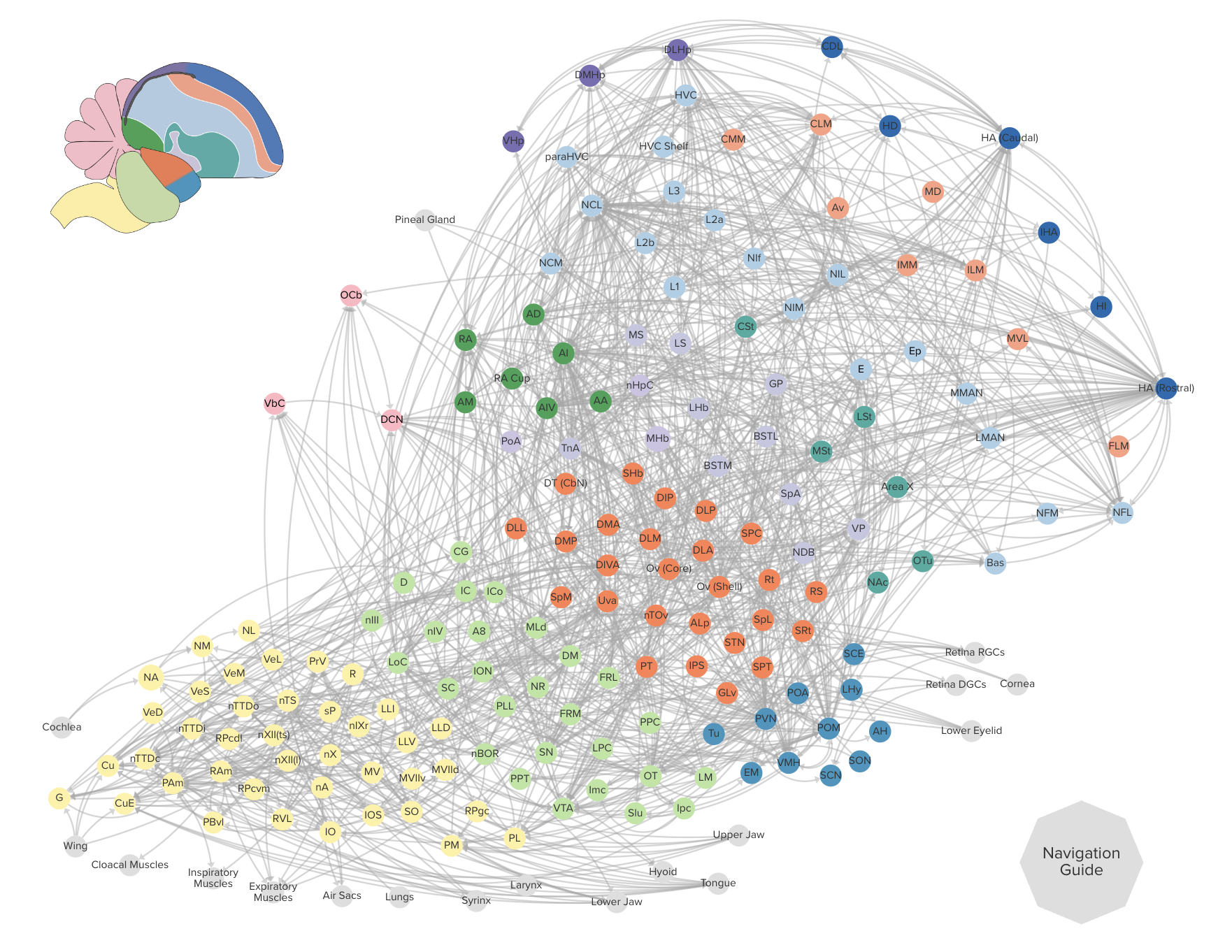
For my PhD at the University of Chicago, I worked in Daniel Margoliash's lab on auditory perception and mate choice in female zebra finches, using extracellular electrophysiology and behavioral assays. I also built and analyzed a tracer-based projectome of the songbird brain (oscine-net.org).
I'm currently working toward an understanding of how seemingly innate mechanisms pertaining to social-behavioral states like courtship, pair bonding, and parenting are re-tuned through distinct hormonal and modulatory mechanisms, triggered by experience.
Research
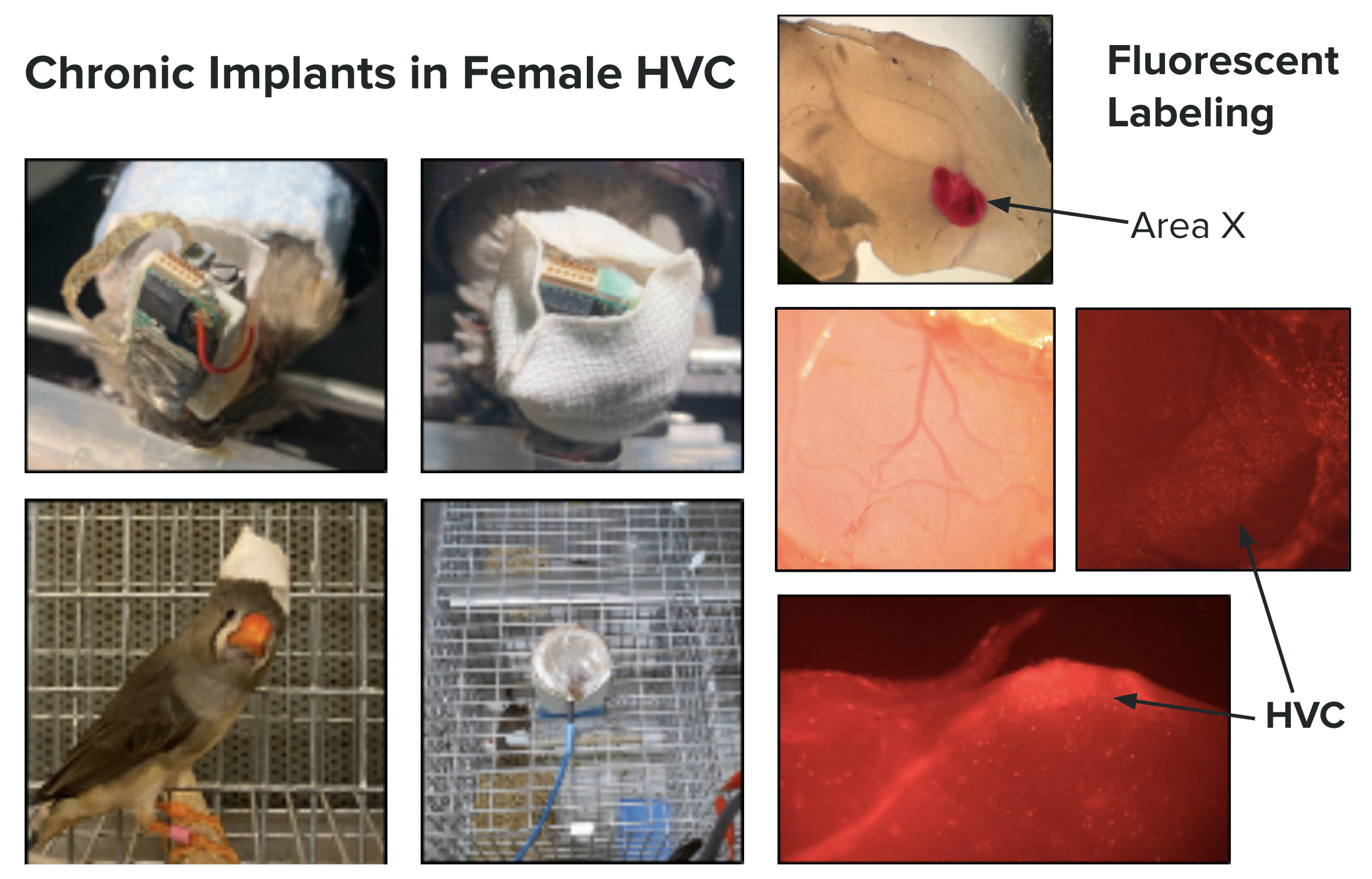
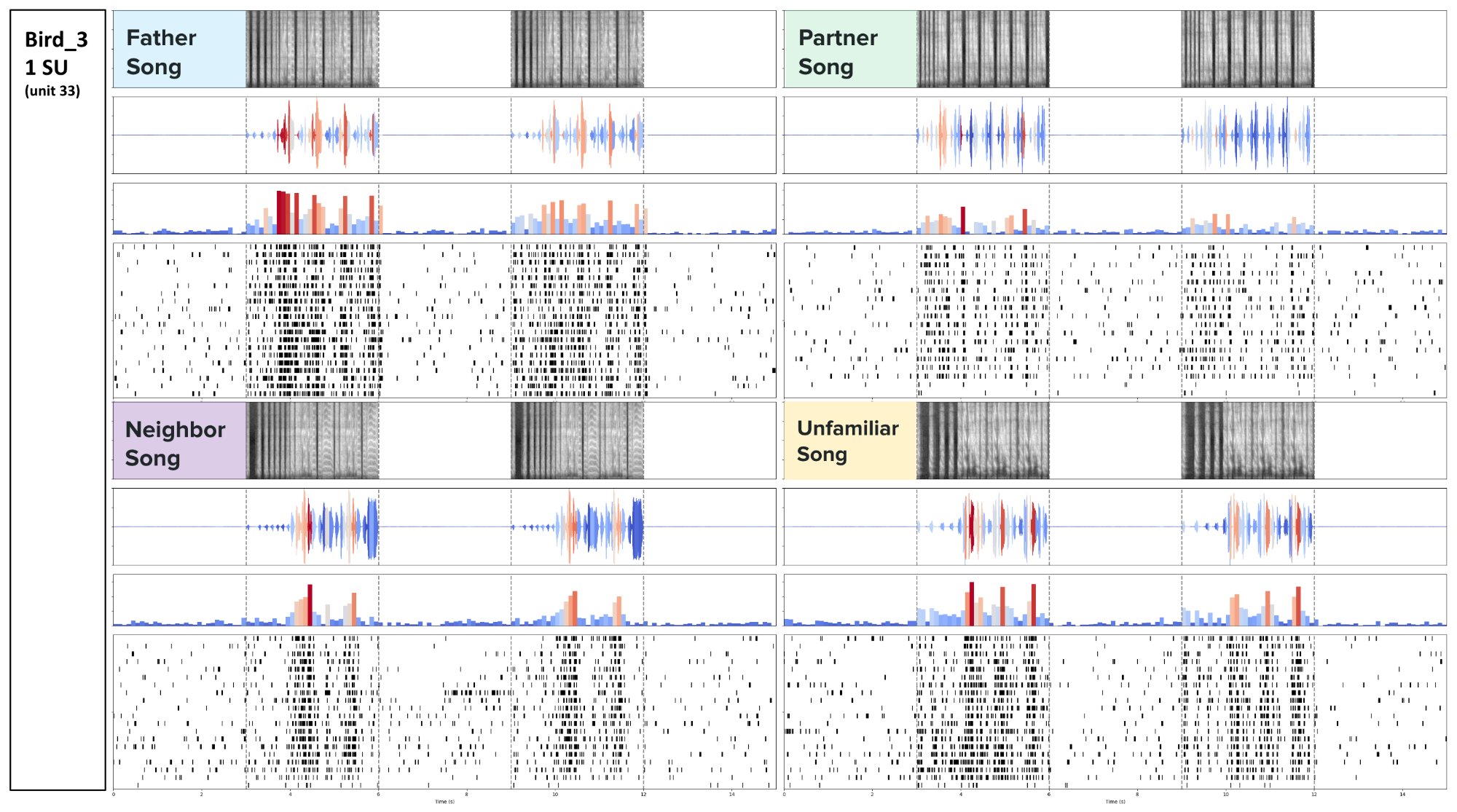
Recorded neural activity in female zebra finch HVC during vocalization playback and live social interactions to ask how they perceive and evaluate male song. Built behavioral assays for mate preference. Used machine vision to measure sex differences in vocal and movement responses. Also analyzed temporal structure in male song and contributed to automatic segmentation methods.
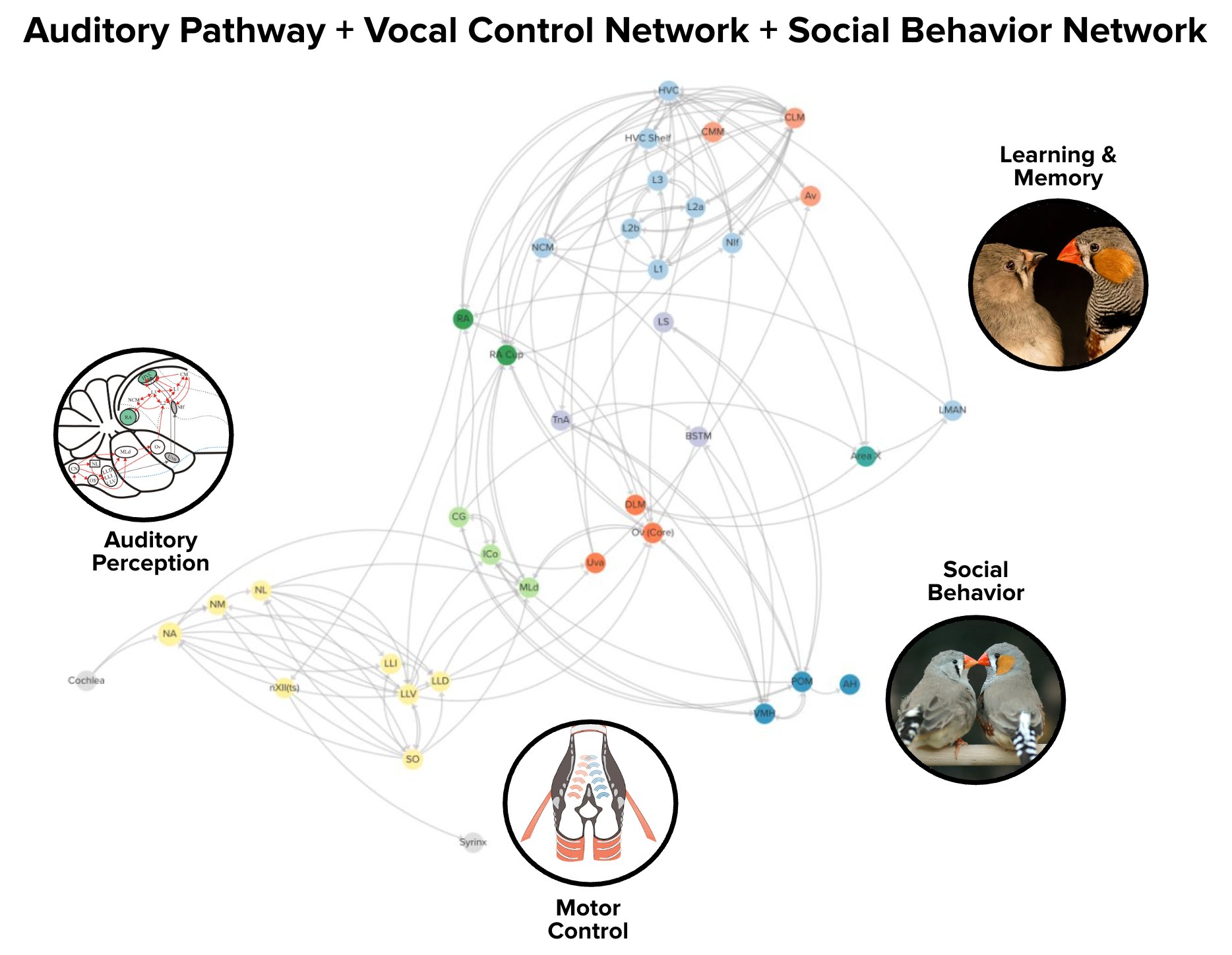
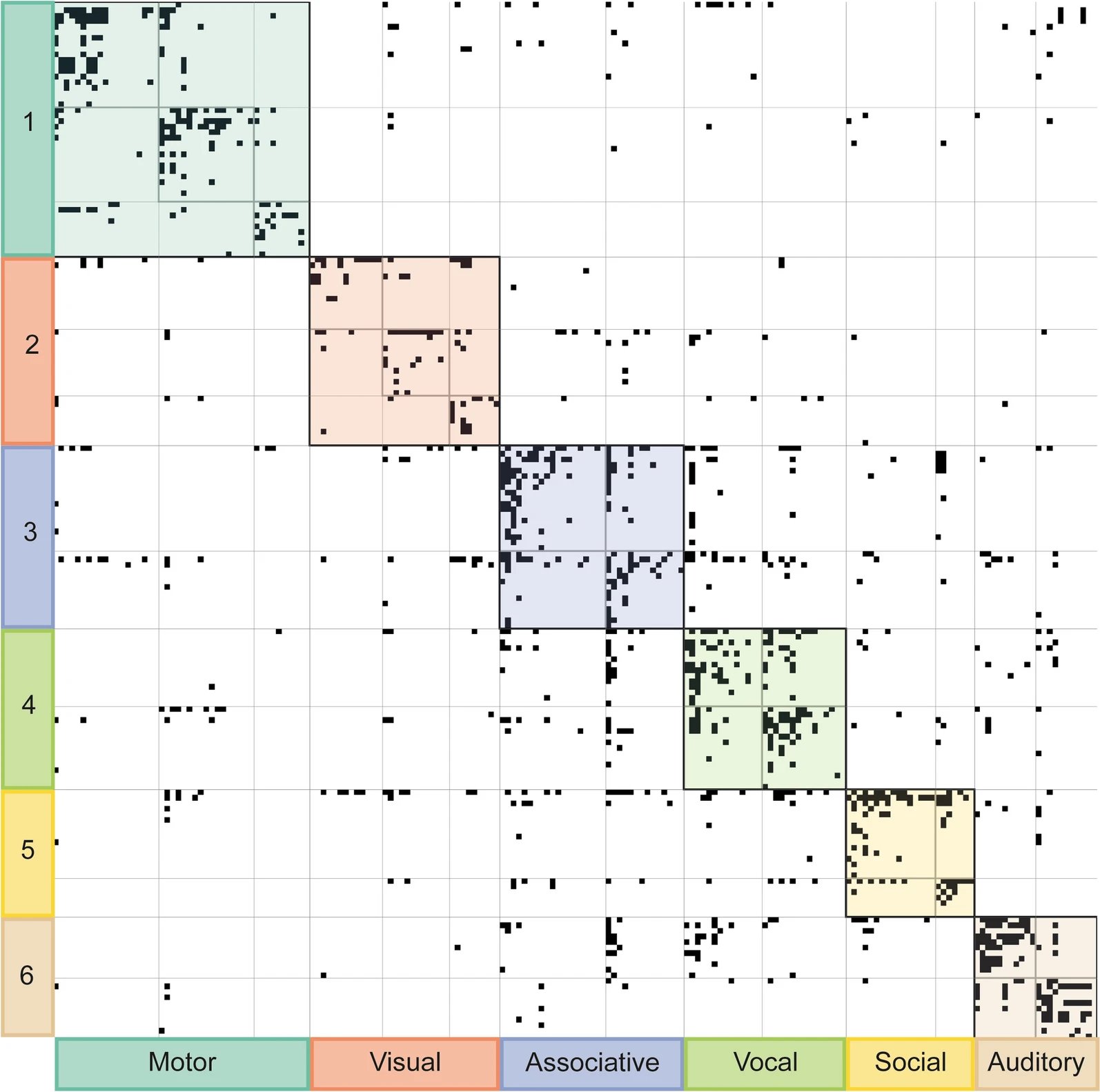
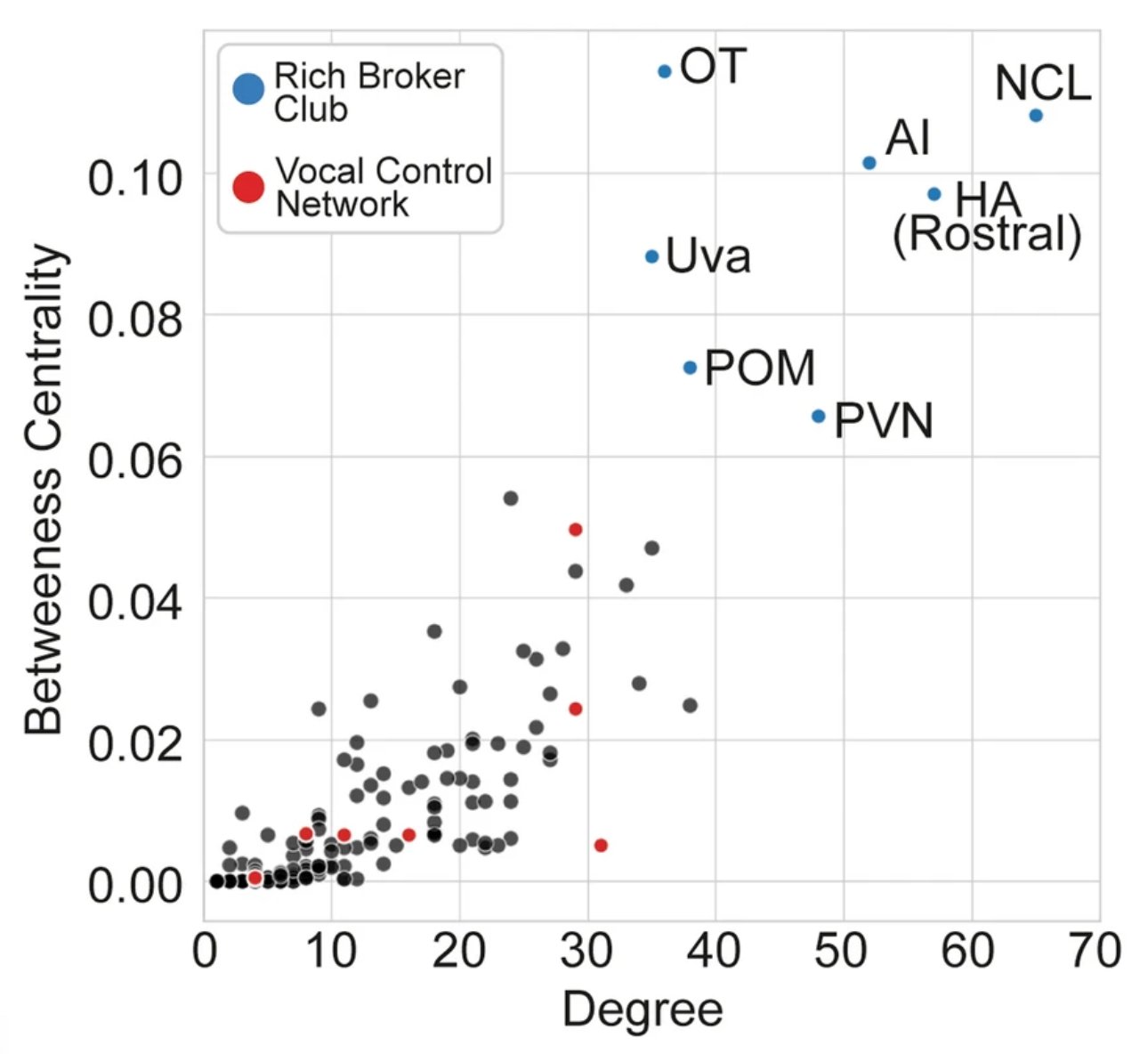
Built a tracer-based projectome of the songbird brain (oscine-net.org) and used graph theory to characterize brain-wide network organization beyond the canonical vocal control circuit.
Studying how prolactin alters auditory responses to offspring vocalizations. Running immunohistochemistry assays and conducting in vivo single-unit recordings with pharmacological manipulations in the caudomedial nidopallium (NCM) and exploring its connectivity to the ventromedial nucleus of the hypothalamus (VMH).
Part of a broader effort to understand how the hormonal profiles that define social-behavioral states gate and reshape sensory processing.
Building an ethologically realistic robotic zebra finch chick that appears, moves, and sounds like a real chick. Begging call vocalizations come from playback recordings or from the conditional VAE-based begging-call generator (see Tools).
The robot will be used in neuroethological experiments to explore the extent to which begging calls drive parental feeding behavior.
Tools
OSCINE-NET
Songbird Brain Projectome
Interactive web resource for exploring tracer-based structural connections in the songbird brain.
○ Visit oscine-net.org →Zebra Finch Begging-Call Generator
Conditional VAE Call Synthesizer
Synthesizer for zebra finch chick begging calls. Sliders can be pushed beyond the species-typical range to generate supernormal stimuli for playback experiments.
○ Try on Hugging Face →Publications
- 2024
Contact
University of Michigan
Michigan Neuroscience Institute